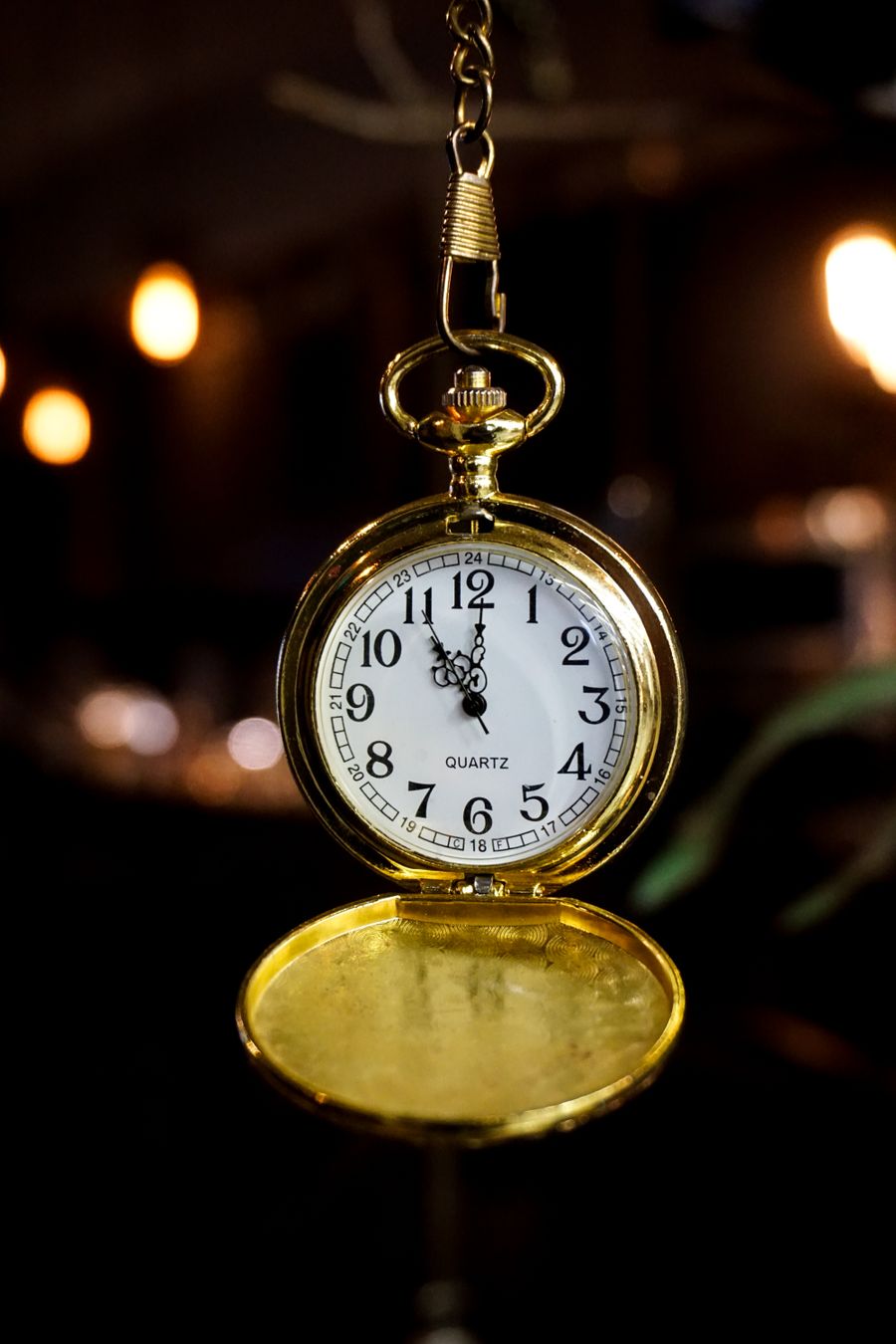
The tourbillon is the most celebrated complication in watchmaking. It is also, depending on how rigorously you examine the claim, either a masterpiece of mechanical ingenuity or an elaborate solution to a problem that no longer exists. The tension between these readings is not a flaw in the tourbillon's story. It is the story.
Abraham-Louis Breguet patented the tourbillon in 1801, though he had been developing it for a decade before. The patent describes the invention with characteristic precision: a revolving carriage carrying the entire escapement and balance wheel, rotating once per minute, so that the errors induced by gravity in any one position are continuously averaged and neutralized. The name, chosen by Breguet himself, means "whirlwind" in French — a word that captures both the motion and the drama of the mechanism.
The Problem Breguet Was Solving
To understand the tourbillon, one must understand the specific pathology it was designed to cure. A pocket watch, when placed in a waistcoat pocket, spends most of its time in a vertical position. The balance wheel, which oscillates back and forth to regulate the escapement, is affected by gravity when held in this orientation. Depending on which way the watch is oriented — crown up, crown down, dial facing left or right — the pull of gravity acts differently on the balance wheel, changing its effective rate. A watch that is perfectly accurate when lying flat may gain or lose seconds per day when stood upright.
Breguet's solution was elegant in its logic: if the escapement is continuously rotating, it passes through every vertical orientation in sequence, and the errors cancel each other out. In practice, no single position is maintained long enough to dominate the rate. The tourbillon does not eliminate the effect of gravity — it distributes it so evenly that it becomes, in the long run, negligible.
"The tourbillon is the answer to a question that watchmakers of the early nineteenth century could not stop asking: how do you make a pocket watch run as accurately lying flat as it does standing upright?"— George Daniels, The Art of Breguet
The Wristwatch Problem
For nearly a century and a half, the tourbillon remained confined to pocket watches and marine chronometers. It was applied to wristwatches only in the mid-twentieth century, when Swiss makers, seeking to demonstrate the ultimate in miniaturization and craftsmanship, began adapting the complication to the far smaller scales demanded by a watch worn on the wrist.
This is where the myth begins. A wristwatch, unlike a pocket watch, is rarely stationary. It moves continuously with the wearer's arm — rotating through every conceivable orientation many times per hour. Even without a tourbillon, the effects of gravity are averaged out by this constant motion. The rate error that the tourbillon was invented to correct is, in a watch worn on a living wrist, already substantially nullified by the act of wearing it.
Several independent studies, most notably those conducted by the Wostep watchmaking school in the 1980s and 1990s, confirmed this awkward reality: a well-regulated lever escapement in a standard wristwatch can match or exceed the rate accuracy of a tourbillon when both are measured under wrist-wearing conditions. The tourbillon, measured not on the timing machine but on the human body, offers little or no measurable advantage.
What the Tourbillon Actually Is
And yet: the tourbillon endures. It endures in greater numbers and at higher prices than at any point in its history. The explanation is not engineering but culture — and culture, as the watchmaking industry has long understood, is not less real than engineering.
The tourbillon is one of the most demanding objects in precision manufacturing. Its cage, which carries the balance, escapement, and several dozen components, must be light enough not to impede the energy flow from the mainspring, yet rigid enough to maintain its geometry to within microns. The most demanding tourbillons weigh under 0.3 grams — some considerably less. They are assembled under magnification, with tools so fine that a misplaced breath can scatter a component beyond recovery. The watchmakers who build them serve apprenticeships measured in years before they are trusted to work on the carriage alone.
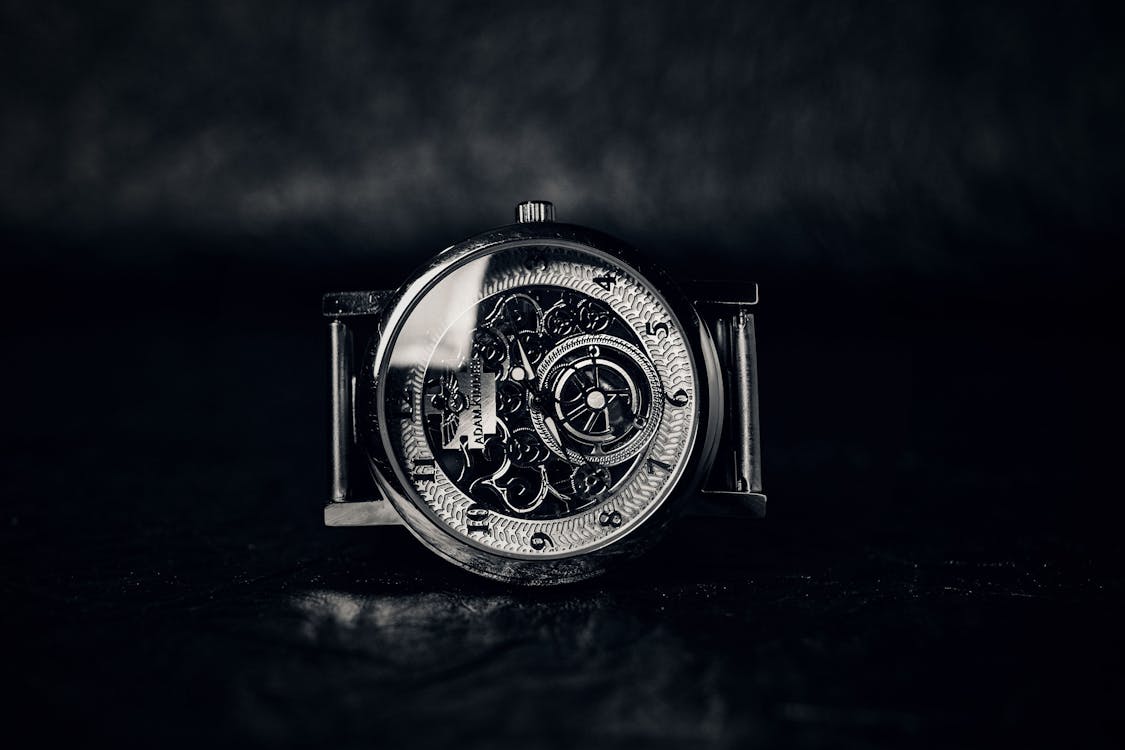
This is craftsmanship at an extreme that most manufactured objects never approach. When you look through the dial of a tourbillon watch and see the cage revolving — a tiny, intricate galaxy of pivots and levers, turning once per minute with perfect unhurried regularity — you are looking at something that a human being made, by hand, to a tolerance that a machine would struggle to match. Whether or not it makes the watch more accurate is almost beside the point.
The Honest Case
The honest case for the tourbillon in the twenty-first century is not that it keeps better time. It is that it represents something worth preserving: the commitment to making things as well as they can be made, regardless of whether the improvement is measurable to the wearer. The watch industry has always operated partly on this logic. The movement you will never see, the finishing on the underside of the plate, the bevelling of a bridge that is invisible once the case is closed — all of these are acts of unnecessary excellence, carried out because the people who make watches believe that unnecessary excellence is, in fact, necessary.
The tourbillon is this philosophy at its most visible and most theatrical. It is a complication that puts its own working on display, that invites the viewer to watch a problem being solved in real time, even if the problem — in the specific context of a wristwatch in 2026 — is largely theoretical. It is engineering as performance, and craft as argument: an argument that how things are made matters, independent of whether the result is measurably superior.
Breguet, who was never modest about his achievements, would probably have accepted this reframing without embarrassment. He understood, better than most, that the most sophisticated customers do not buy on specification alone. They buy on the evidence of skill, on the proof of mastery, on the pleasure of the beautiful object. By those criteria — the only criteria that matter in the end — the tourbillon remains exactly what he intended it to be: the finest demonstration of what a watchmaker can do.